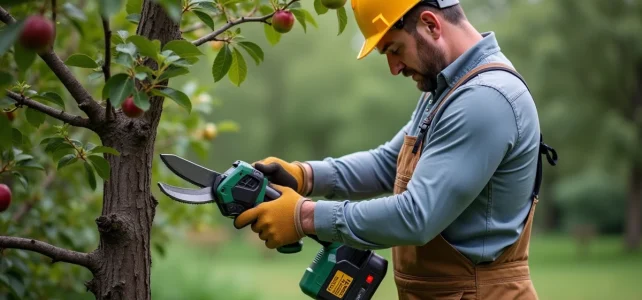
Some models boast impressive power but quickly become outdated as the branch grows a bit too large. Conversely, relying on brute strength does not guarantee ease of use or simplified maintenance. Manufacturers compete with ranges, promising wonders for every type of tree or job site, but the reality lies elsewhere: most neglect to clearly indicate how far the versatility of their tool extends. Yet, behind the technical sheet, it is the concrete details that make the difference: actual cutting capacity, balance, safety. Ignoring these points exposes one to a poorly adapted, sometimes dangerous, or simply ineffective tool.
Every tree has its pruner: understanding the different models and their uses
In the face of the complexity of vegetation, the tool must adapt. The diversity of pruners is not a manufacturer whim but a response to the variety of situations on the ground. Pole pruner, pole saw, top handle pruner: each version finds its place according to the configuration to be addressed. The pole pruner is intended for high branches; it avoids risky climbing and secures the intervention.
Further reading : How to Choose the Best Air Cooler for a Comfortable Summer at Home
The robustness of a gas chainsaw will appeal for felling or trimming mature trees, while a battery chainsaw offers lightness and responsiveness for routine maintenance or occasional cuts. Electric models score points for their silence and simplicity. As for the mini chainsaw, it effortlessly handles small diameters, leaving the finishing touches to manual tools like arborist saws or pruners.
To choose the pruning tool that fits your terrain, you need to consider the wood density, the height of intervention, but also the regularity of the work. Ergonomics come into play: a well-fitted harness makes a difference during long sessions. For an overview of the references to prioritize in 2026, the site elagueuse-warrior.com stands out as a solid resource, allowing you to refine your selection based on your actual needs.
Further reading : How to choose the best home products awarded this year?
What technical criteria to consider for making the right choice?
The pruner is not just a matter of sharpness. To find a reliable tool, you need to evaluate the engine power: it is what allows you to tackle thick branches and hardwood. Gas engines are known to deliver more power, which is appealing for prolonged jobs. For small tasks or home maintenance, battery life and its actual capacity become crucial: the goal is to aim for a working time consistent with the number of trees to be treated.
The weight is not a detail: a pruner that is too heavy quickly exhausts, especially when working with arms raised. The ergonomic grip and anti-vibration system preserve muscle health and reduce discomfort. The automatic chain lubrication simplifies maintenance while extending the tool’s lifespan.
The following elements allow for effective comparison of features:
- Guide bar: adjust the length to the thickness of the branches you regularly cut.
- Chain speed: a high speed offers a cleaner and faster cut.
- Noise level: some models stand out for their quietness, appreciated by neighbors.
- Safety devices: chain brake, hand guard, and locking system are there to limit accidents.
The easier a device is to maintain, the longer it lasts: direct access to the chain, tool-free tensioning, simplified disassembly. Evaluate each criterion against the practical uses and constraints of your trees: this is where the truly suitable choice is made.
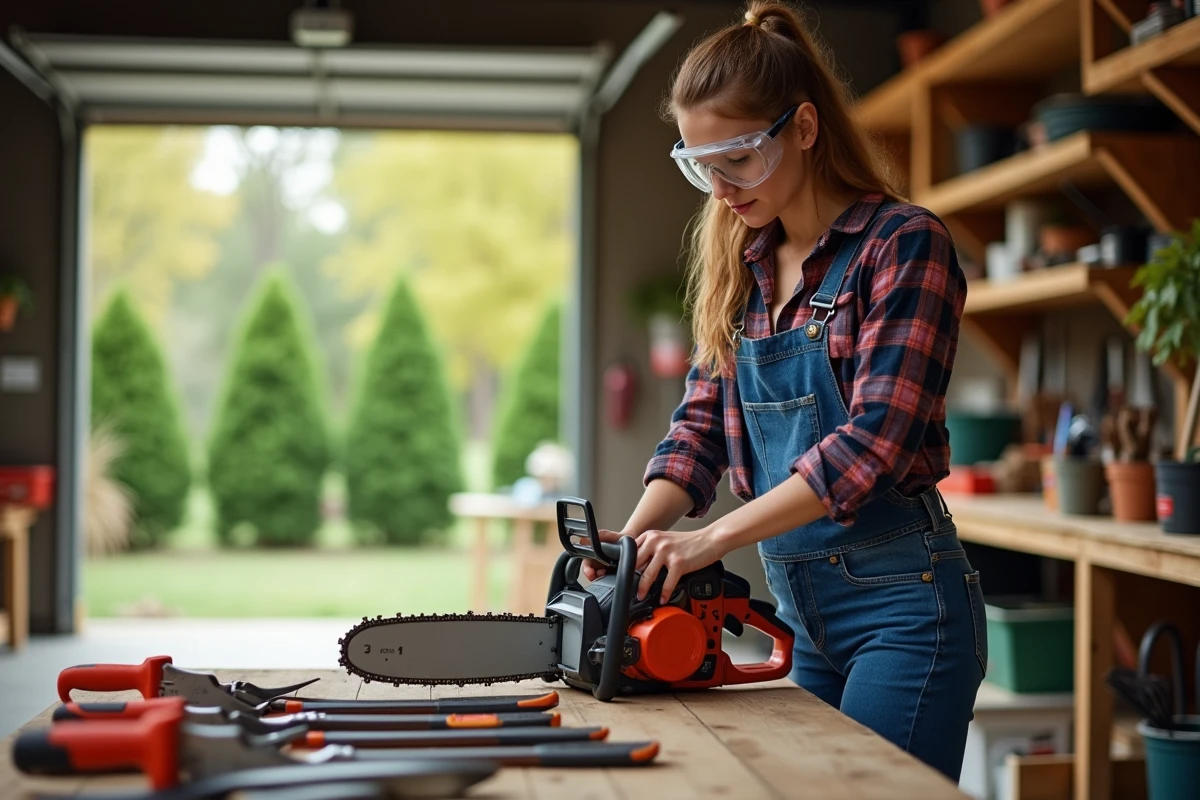
Comparing brands and models: tips for finding the pruner that suits you
In the face of the avalanche of pruner models, you need to sort according to the reality of your garden. Start by targeting the type of use: simple maintenance or intensive work? The rhythm, height, and wood density all influence this. To cut branches at height without noise or mechanical complications, the battery pole pruner proves practical. Professionals, on the other hand, continue to opt for the gas engine, robust and enduring.
To refine the choice of a pruner, the lifespan must be taken into account: solid casing, simple tensioning system, interchangeable battery make a difference over the seasons. Some manufacturers play the compatibility card: one battery for multiple tools is an argument for streamlining equipment. Also consider the telescopic pole if access to high parts is frequent.
Here are some comparison points to integrate into your approach:
- Ergonomic handle: for easy and precise handling.
- Anti-vibration system: reduces fatigue, especially during long sessions.
- Battery life: for a medium-sized garden, a high-performance battery is sufficient; for a larger park, plan for a second spare battery.
Check user feedback in France, sift through testimonials on the reliability of pruner brands. An efficient after-sales service, quick availability of spare parts, consistent performance: everything counts. Ultimately, it is in the quality of the cut, ease of use, and ability to adapt to your constraints that the right tool reveals itself. The one that, season after season, transforms pruning into a sure and controlled gesture.