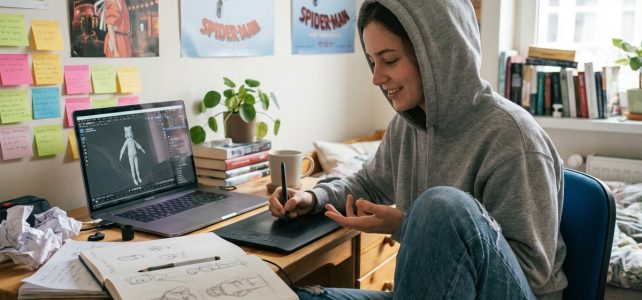
Dropout rates in specialized programs sometimes reach 40%. The gap between initial expectations and the reality of daily work remains one of the main causes of dropout. Some programs require mastery of more than six professional software applications from the first year, not to mention the increasing number of group exercises over the semesters.
Recruiters systematically prioritize technical versatility and resilience to repetition, well before creativity. The most recognized schools demand comprehensive portfolios right from the entrance exam, with a selection process that leaves little room for improvisation.
Related reading : The best strategies to boost your job search in 2024
What does the daily life of a 3D animation student really look like?
Daily life in 3D animation is unforgiving: rigor, perseverance, and the ability to repeat the same actions over and over again in pursuit of excellence. From the moment they arrive at school, students juggle theoretical courses, intensive practice sessions, and tight deadlines. The schedule typically stretches from morning to evening, each day dictated by the imperative to make progress on projects, to master a range of professional software like Maya, Blender, Houdini, or ZBrush. There’s no alternative: one must immerse themselves in modeling, character animation, compositing, and image retouching, often for hours on end, to grasp every nuance of the profession.
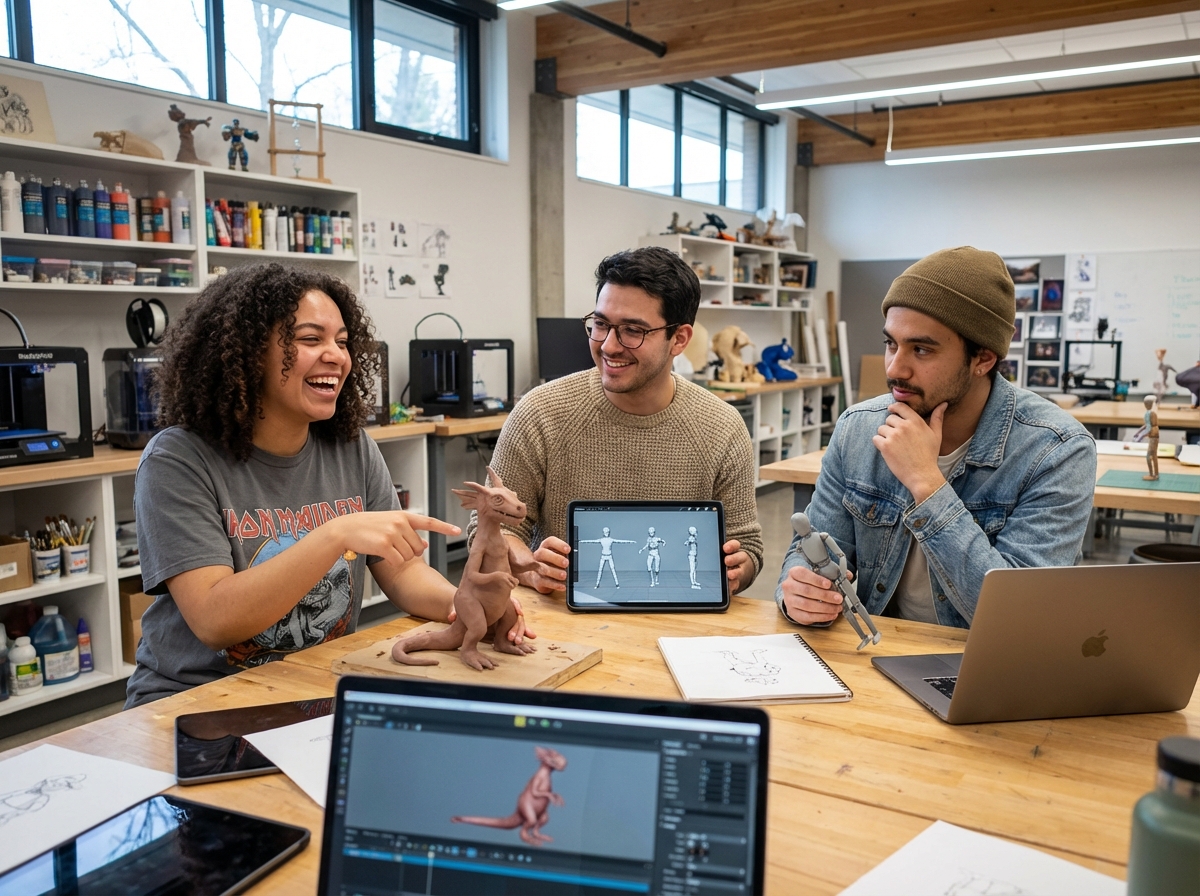
Collaboration quickly becomes essential. It is impossible to advance alone: each production mobilizes project teams, just like in a real film studio or in the video game industry, whether in Paris or elsewhere in France. Knowing how to welcome criticism, adjust creativity according to technical constraints, and impose collective discipline: all of this shapes character as much as talent. Learning goes far beyond pure technique; it is also about building mental resilience in the face of unexpected events, last-minute revisions, and the demand for results.
Read also : Tips to Avoid Too Much Baking Powder in a Cake and Succeed with Your Desserts
The pace of projects allows little respite. Each delivery, each render, each new task becomes a real-world test. Mistakes are no longer failures but steps toward progress: one must accept to start over, refine, and seek solutions until mastery is achieved. This daily life demands comfort with complexity, a taste for precision, and enthusiasm in the face of repetition. Quickly, the reality of this profession imposes itself: patience, curiosity, attention to detail, and a passion for technical skill take precedence over the pursuit of spectacular effects. To explore further the qualities to cultivate, take a look at the qualities necessary for success in 3D animation: the passion for daily practice makes all the difference.
Skills, creativity, and software: what you need to love to succeed in this field
Mastering technique, cultivating creativity
The common thread in 3D animation? A constant balance between technical skills and artistic flair. The training leads you to become familiar with specialized software: modeling, visual effects animation, compositing, rendering management… Technological curiosity becomes a valuable asset: each software novelty, each update can disrupt your methods and enrich your creative approach.
Working in a team, refining your vision
Success in this sector also relies on the art of integrating into a production team. Whether in digital cinema animation or in applied arts, one must work alongside concept artists, modelers, image specialists, each bringing their vision and skills. This diversity enriches the project but also imposes the need to respect often strict technical constraints, inherited from animation cinema or the video sector.
Here are some traits to develop to thrive in this environment:
- A penchant for visual research and graphic experimentation
- A strong interest in design sciences and technologies
- An ability to adapt creativity to the concrete realities of production
An attraction to design and adaptability are powerful drivers over time. What unites students is a love for solving technical problems, building an original aesthetic, and contributing to a collective project. Day after day, this intersection of technical precision and artistic drive forges a strong professional identity for those who choose to evolve in the image professions.
Training, career opportunities, and salaries: all the answers to choose the right path
Finding the right training
The search for the appropriate animation training begins early, right from high school, after a general or technological baccalaureate. Several paths exist: bachelor in animation, BTS, professional license, each offering specificities. Schools of audiovisual media with a focus on image or sound, and institutes specializing in digital cinema animation, provide solid technical foundations: mastery of modeling, learning game design, project management, without neglecting the artistic and cultural dimension.
Among the programs, we find:
- The bachelor: three years to acquire the fundamentals and build a solid portfolio
- The BTS audiovisual option image professions: two years for a quick entry into the job market or further studies
- The specialization in video game animation or animation cinema: a gateway to French or international studios
Real opportunities, evolving salaries
France is establishing itself as a key player in digital creation, driven by the France 2030 plan that energizes animation studios and the AAA video game sector. Graduates integrate into diverse teams: rigging, lighting, environment design, animation film production. The prospects cover positions ranging from art director to animation film director, including video game development and project management while respecting budgets.
| Job | Starting Salary (gross annual) |
|---|---|
| 3D Graphic Designer | €24,000 – €28,000 |
| Game Designer | €25,000 – €32,000 |
| Art Director | €35,000 – €45,000 |
This sector demands excellence and rewards agility, offering everyone the chance to find their place, whether in a studio or as a freelancer, here or elsewhere. The adventure often begins with patience and meticulousness; it continues with the pride of seeing one’s creations come to life on screen.