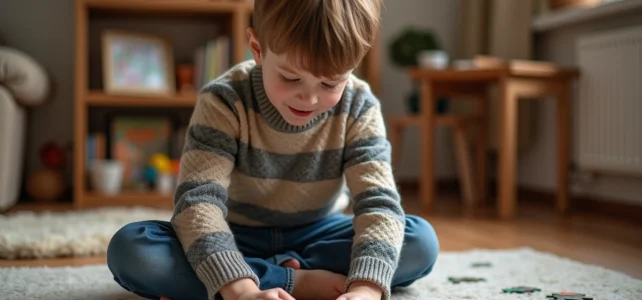
One child in fifty develops remarkable intellectual abilities, often manifested through unusual interests or a sharpened logic from a young age. However, these signals frequently go unnoticed. The tools are lacking, the markers are missing, and the child’s uniqueness remains suspended, shielded from view.
Observing a constant interest in logic games or puzzles is not trivial. Sometimes it is mistaken for a mere hobby, but a passion for puzzles can sometimes hide a true intellectual drive. It is essential to recognize this difference, to see what distinguishes simple curiosity from intelligence that is advanced for its age. The key: recognize the signals, then choose the right levers to support the child in their development.
See also : Prescription and forfeiture: what are the differences and how to avoid confusing the two?
Identifying signs of intellectual precocity in a puzzle-loving child
For some children, the interest in puzzles goes far beyond simple play. This taste, observed very early on, can reflect a particular intellectual potential. It involves looking without preconceived notions, allowing the child to evolve at their own pace. Some signs speak for themselves: they tackle complex puzzles long before their peers, remain focused for long minutes, or effortlessly remember shapes and colors. Puzzles, far from being mere distractions, sharpen thinking, enhance visual memory, and refine motor coordination.
Sometimes we talk about gifted children or highly intelligent children. These profiles are identified by their approach to problems: they organize their thoughts, demonstrate astonishing creativity, or establish unexpected connections between game elements. When faced with a puzzle, they deploy a method, anticipate difficulties, and even invent new strategies, sometimes surprising to adults. Their tenacity is striking, as is their way of handling setbacks or failure.
See also : How to choose the best home products awarded this year?
When a child quickly climbs the ranks and becomes passionate about increasingly sophisticated puzzles, the idea of high intellectual potential gains substance. One observes a desire to understand the meaning of things, to explain how they proceed, or to share their discoveries with those around them. To delve deeper into these signals, the resources on Family 2 Family detail what distinguishes a gifted child in puzzles and how to nurture their abilities. Listening and attention remain the best allies to support their uniqueness.
How to distinguish a simple interest in puzzles from true precocious talent?
A puzzle-loving child is intriguing. While some are content to assemble, others seek to understand, transform, and invent. The difference between leisure and intellectual precocity lies in the depth of engagement. A precocious child does not just finish the puzzle: they describe their approach, imagine variations, or already foresee the next challenges. For them, solving becomes exploring, and each success paves the way for new challenges.
Their holistic thinking is noticeable: they visualize the whole before even starting, instinctively connect distant pieces, and identify similarities between shapes, patterns, and colors. The creativity can be bewildering, and the visual memory is impressive. Some children escalate in difficulty without transition, manage frustration with maturity, and seek meaning in the exercise.
Here are some concrete manifestations of this profile:
- Difficulties in integration: sometimes, the gap with peers translates into a lesser interest in collective games, an affinity with adults, or the pursuit of uncommon challenges.
- Hypersensitivity and critical thinking: the child asks questions, analyzes, and makes disconcerting remarks that reveal a sharp perspective on games, themselves, and others.
Adults, often torn between admiration and perplexity, must learn to decipher this progression. Observing consistency, the quality of engagement, and how the child appropriates or revisits challenges: this is the terrain on which the reality of precocity unfolds.
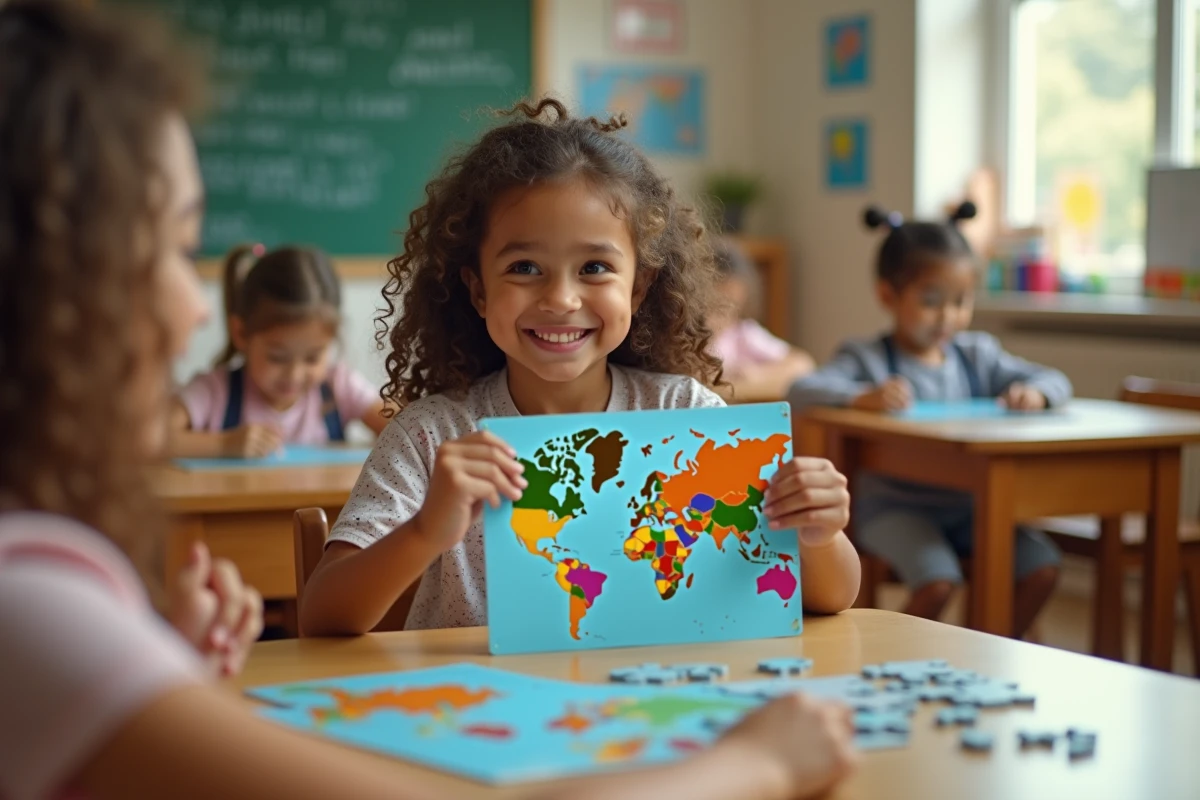
Tips and resources to best support the development of a gifted child
Supporting a gifted child passionate about puzzles requires an adapted approach that varies experiences and nurtures curiosity. To diversify activities and stimulate their development, several types of games can be proposed:
- puzzles
- construction games
- board games
Each of these supports targets specific skills: fine motor skills, logic, creativity. Puzzles, in particular, boost brain plasticity, enhance self-confidence, and broaden the learning experience.
The role of the family is crucial. Allowing the child to explore at their own pace, encouraging them to choose their challenges, adjusting difficulty, and introducing variations: all are ways to cultivate their curiosity. Educational approaches that emphasize autonomy, such as Montessori, provide the child with a stimulating environment where initiative is valued.
School also deserves special attention. Dialogue with the teacher is valuable: sharing the child’s specific needs, seeking the opinion of a psychologist if necessary, or learning about the resources offered by national education. These supports are still uneven, but their existence is progressing. Coordination between family, school, and professionals allows for action on all fronts: anticipation, logic, and management of emotions and frustration.
To vary approaches and nurture progress, several avenues are available to you:
- Offer board games to work on logic and anticipation.
- Focus on construction games to develop fine motor skills and creativity.
- Introduce puzzles to exercise lateral thinking and intellectual endurance.
Accompanying a precocious child means accepting that their path differs, that their passions sometimes take unexpected turns. One puzzle after another, they build worlds where curiosity knows no bounds. Who knows how far this thirst for understanding will lead?