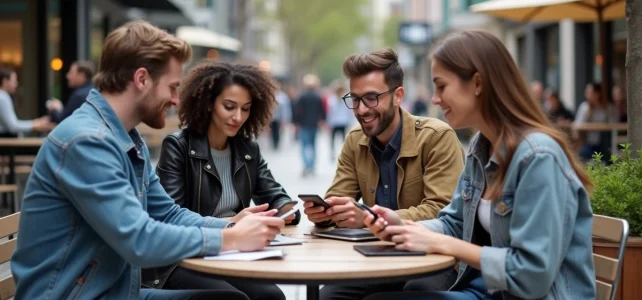
In 2023, a news event can turn into a national debate in less than an hour, or sink into oblivion, depending on the source that disseminates it and the way it circulates. This volatility of information shakes our certainties, undermines trust in traditional channels, and gives even the slightest testimony the power of a manifesto.
When the flood of contradictory information saturates timelines, it becomes difficult to see clearly. Social media accelerates the spread of images and narratives, but verification often falls by the wayside. The more virality takes over, the more rigor erodes. The result: a fog conducive to misunderstandings, sometimes to manipulations.
Further reading : Everything You Need to Know About the Deductibility of Labor Court Lawyer Fees in France
Instead of fostering an open debate, some platforms dig trenches. Polarization becomes the norm, opinions clash, and the sorting between reality and exaggeration becomes more complicated. Behind these tensions lies each individual’s ability to act as an informed citizen, and with it, the very vitality of democratic debate.
Why is information about social movements so difficult to untangle today?
The multiplication of channels disrupts our reference points. Once, a few media outlets structured the narrative; now, the profusion of social media imposes a constant flow where anyone can take on the role of disseminator or analyst. This bubbling feeds uncertainty and opens the door to false information, relayed by algorithms driven more by virality than by rigor.
Recommended read : The best tips and tools to boost your presence on social media
In this context, media literacy struggles to keep pace. Faced with raw content, it becomes harder to distinguish between an analysis, an opinion, or a rumor. The abundance of discourse ultimately diminishes the real diversity of viewpoints: everyone seeks their bearings amid a constant background noise, while words, images, and videos spread without editorial safeguards.
This is where new actors emerge: collectives, independent journalists, specialized media. On gazettedebout.org, for example, the priority is given to the ground, to direct speech, to patient investigation. These approaches do not merely relay current events: they question the functioning of dominant media and invite a redefinition of the role of information in society.
Here are three dynamics that are transforming our relationship with information:
- Social media and algorithms: they propel certain topics to the forefront and relegate others to the shadows.
- Fake news: their rapid spread complicates journalists’ tasks and sows doubt.
- Role of citizens: everyone can participate in the circulation of information, without always having the tools to untangle truth from falsehood.
In this fragmented landscape, one question stands out: how can we ensure reliable, open, and accessible information about social movements, as media noise intensifies and society demands more clarity?
Between traditional media, social networks, and fake news: who really shapes our perspective?
Major media still hold significant weight. Their ability to structure public debate, impose formats, and set the rhythm of current events remains a reference for many. Television channels and established newsrooms continue to steer the discussion, with their own choices and constraints. But the hierarchy is crumbling: the rise of short formats and viral images disrupts the depth of analyses.
On social media, the game changes: everyone can testify, film, tell stories. Immediate access to speech disrupts the production of information. This horizontality, however, remains biased: algorithms select, amplify, or render certain narratives invisible without ever revealing their rules of play.
To better understand what shapes our perception, we must closely examine three phenomena:
- Fake news: their proliferation undermines trust in public discourse.
- Alternative formats: they emerge in response to the fatigue of a media discourse deemed too uniform.
- Journalists and citizens: perspectives intersect, complement, or clash, creating a shifting map of information.
The coverage of social movements concentrates these tensions. Independent media adopt different rhythms, different methods, often closer to the ground. As for the public, they oscillate between distrust and a quest for meaning, navigating between the flood of information and the need for perspective.
Simple reflexes for informing differently and participating in a better-informed society
To cope with this media fragmentation, it becomes wise to adopt a critical eye. Relying on a variety of analyses and viewpoints allows for a better understanding of the complexity of social movements. The essential thing is not to adhere to a single version, but to compare, cross-reference, and examine the methods of those who produce information. Transparency and editorial diversity play a role here as democratic safeguards.
Three actions for citizen information
- Always question the source of content: who publishes it? With what intention?
- Trust media that detail their verification methods and specify their sources.
- Share, exchange, and question those around you: media education thrives on daily discussions and debates.
Being an informed citizen is not just about consuming news reports. It is also about demanding accountability, pointing out inaccuracies, and encouraging the plurality of formats. Alternative media, often more human-sized, offer direct access to the voices of social actors, a richness for grasping the diversity of mobilizations.
The connected society is not doomed to passivity. Forums, networks, platforms: all places where the reception of news can be transformed into a collective construction of knowledge. Armed with these reflexes, citizens can influence how news is told, and perhaps, breathe new life into democracy.